Regenerative Peptides
This category groups peptides studied for their role in tissue-repair signalling pathways: angiogenesis, actin polymerisation and cytoskeletal remodelling, and extracellular-matrix gene expression. They are structurally unrelated to one another and act through different mechanisms, which is precisely why they are often examined side by side in cell-culture models rather than singly.
They are grouped by the process they are studied in, not by structure. The molecules here are unrelated to one another.
Laboratory research use only. Not for human or veterinary use.
Compare
Choosing between these
What separates each of these from the others in the class.
-
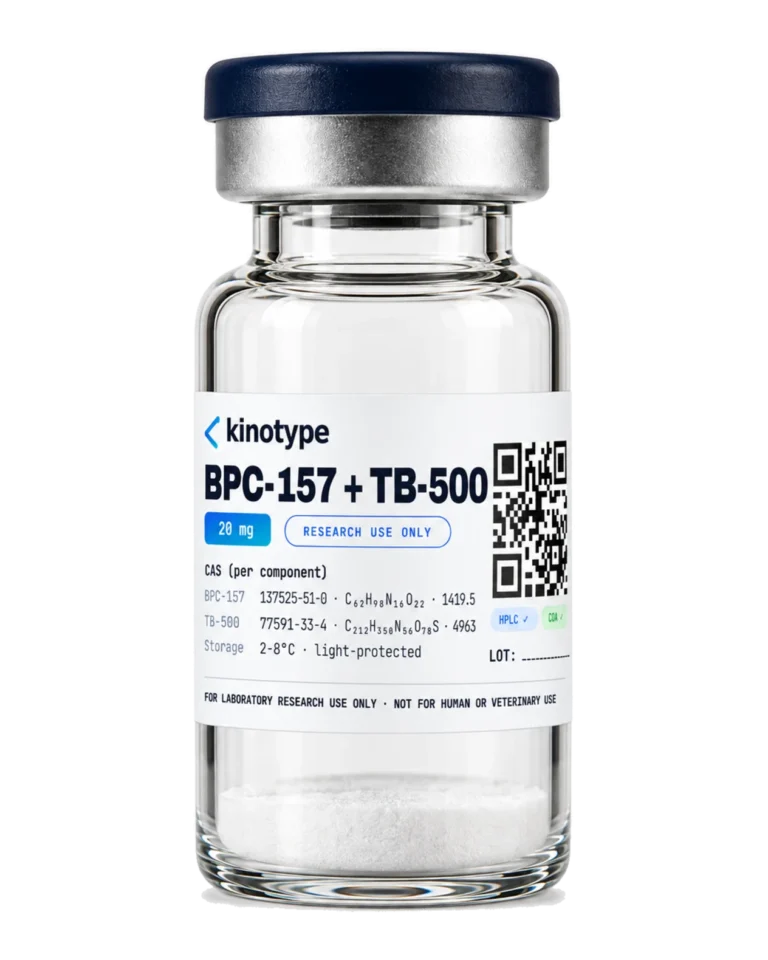
BPC-157 + TB-500 10 mg / 20 mg
Adds thymosin β4, which acts through actin binding rather than the angiogenic route — two mechanisms in one preparation.
Certificate of analysis → -
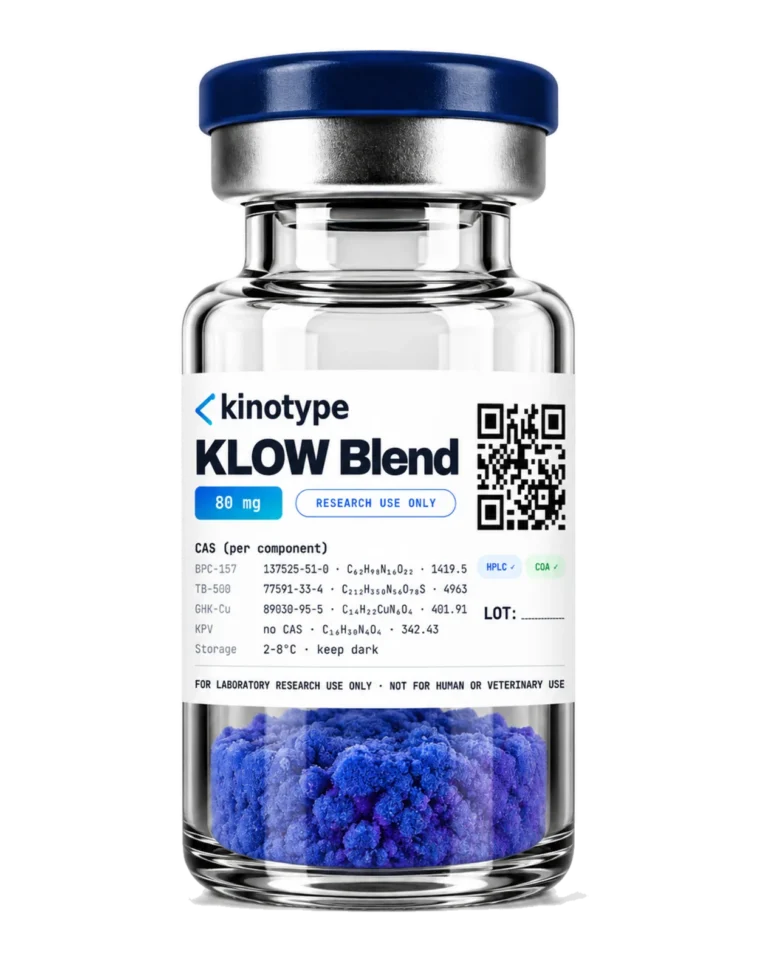
KLOW Blend 80 mg
Four components: BPC-157, thymosin β4, GHK-Cu and KPV. The broadest preparation here, and correspondingly the hardest to attribute any single observation to one component.
Certificate of analysis → -
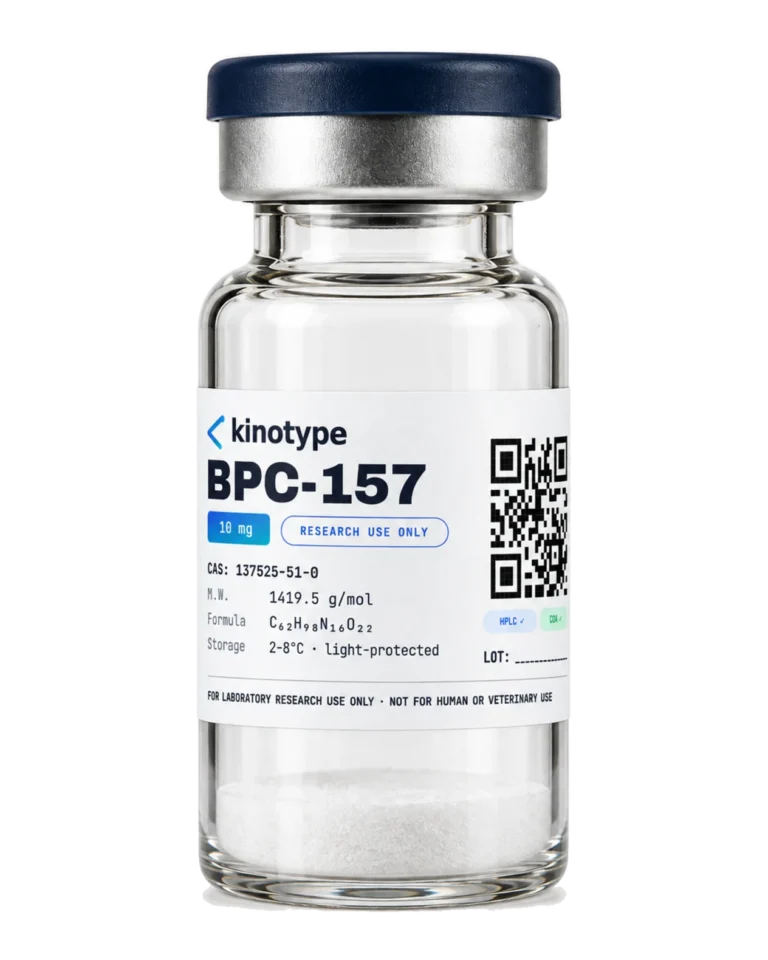
BPC-157 5 mg
The single compound on its own. The baseline when the question is BPC-157 specifically and nothing else should confound it.
Certificate of analysis → -
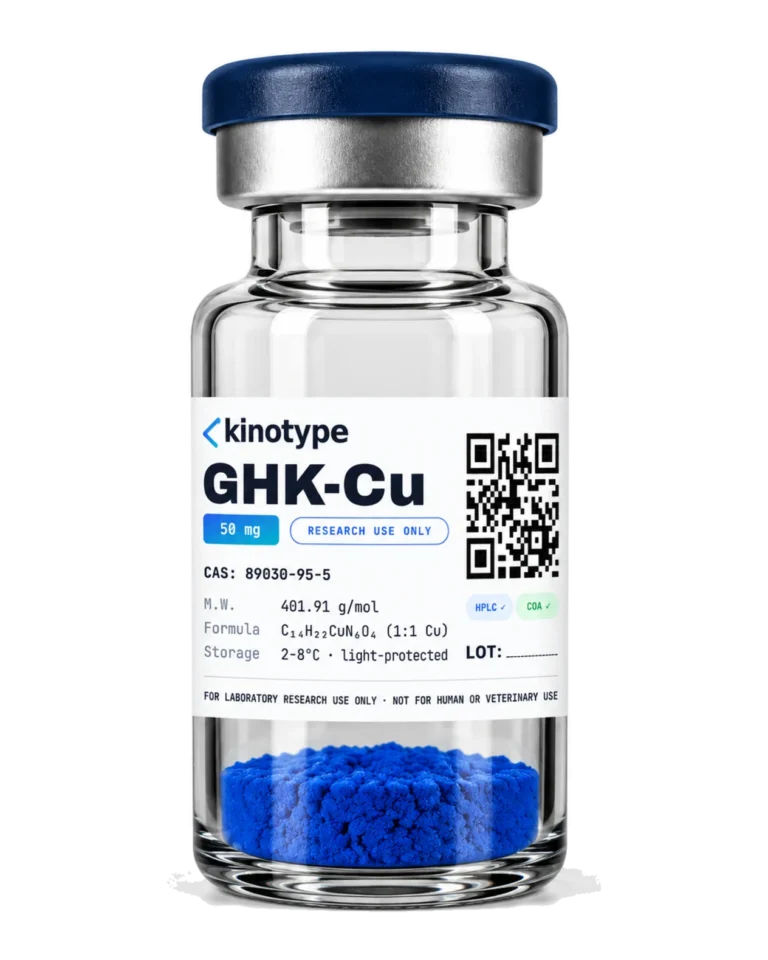
GHK-Cu 50 mg / 100 mg
The only copper complex in this class. Chosen where the question involves copper transport or extracellular-matrix gene expression rather than a signalling cascade.
Certificate of analysis →
Handling: reconstitution storage and stability checking a certificate is genuine